Metaphor is a crucial literary device used within fiction writing (all writing, really) that will not only enhance your prose, but deepen the overall thematic meaning of your book. But what is a metaphor, and how do you write one? In this blog post, I’m sharing how you can imbue figurative language using metaphors into your book for a resonating reading experience.
Disclaimer: This post may include affiliate links. If you purchase through our link, we will receive a small commission at no additional cost to you. See our full disclosure policy, here.
Topics of Discussion
What is a metaphor?
How to write a metaphor in a story.
What are the various types of metaphors in literature?
The difference between a metaphor and a simile.
Imbuing figurative language strengthens your storytelling skills.
What is a metaphor?
A metaphor is the comparison of two unlike things, and they are often figures of speech. Using this literary device enhances the texture of your writing, bringing emotion to the idea you’re exploring. Direct metaphors use the verb form “to be” when making the comparison.
For example, this infamous metaphor by Shakespeare comes from his play, As You Like It.
“All the world’s a stage,”
When you read this line, obviously the world isn’t an actual stage, but we as readers understand exactly what the author is conveying. The idea expressed by Shakespeare is resonating through this figurative metaphor rather than if it were written literally.
How to write a metaphor in a story
Metaphor AnalysiS
When it comes to actually writing metaphors in fiction, you can use characteristics from either a person or thing, and then compare the two.
The technical terms that make up metaphors are called, “tenor” and “vehicle”.
We will use the first line from the Shakespeare example to break it down.
“All the world’s a stage” The tenor is the subject, “world” and the vehicle the object that the subject is being compared to “stage”.
What’s the similarity? Both the world and stages are large, they encompass humanity upon them. What’s the deeper meaning? That people in real-life feel as performative as a play.
Another example comes from the classic nursery rhyme: “Row, row, row your boat”. There is a metaphor within the line, “Life is but a dream.” Life and dream are the comparison. Life is not literally a dream (depending on who you ask), it’s figurative. Yet, when we read that line, we feel exactly what the author means. What’s the deeper meaning? The author is saying that life is wondrous, ethereal, and enchanting without literally saying it.
That’s magic.
other types of metaphor in literature
Implied metaphor - Implied metaphor’s are subtle because they are implied.
This example comes from my short story, A Stable Home. A fairy tale.
“Milo stormed into his room and slammed the door.”
This implied metaphor is comparing Milo’s anger to that of storms, those of which are loud and destructive. This metaphor is implied because anger—the “tenor”— isn’t specifically stated, yet we can infer it as readers.
If I were to write this as a direct metaphor, I could say, “Milo’s anger was a storm.” And if I wanted to extend the metaphor, I would say, “Milo’s anger was a storm. A destructive element that only knew rage. The door was his victim.”
Mixed metaphor - Mixed metaphors are often used comically because they are poor comparisons. They express two different metaphors or ideas that don’t make sense, but can be used in a humorous manner.
For example, Michael Scott from The Office often does this. It’s part of his characterization.
Here’s a quote from one of the episodes, spoken by Michael Scott: “You know what they say: fool me once, strike one, but fool me twice…strike three.”
Mixing metaphors can unintentionally confuse, and put expectations into a reader’s mind, unless they’re purposeful—like the example above.
Extended metaphor - These are simply long-form metaphors, expanding into a paragraph, multiple scenes, or can encompass an entire novel. The Shakespeare example mentioned earlier is the perfect example.
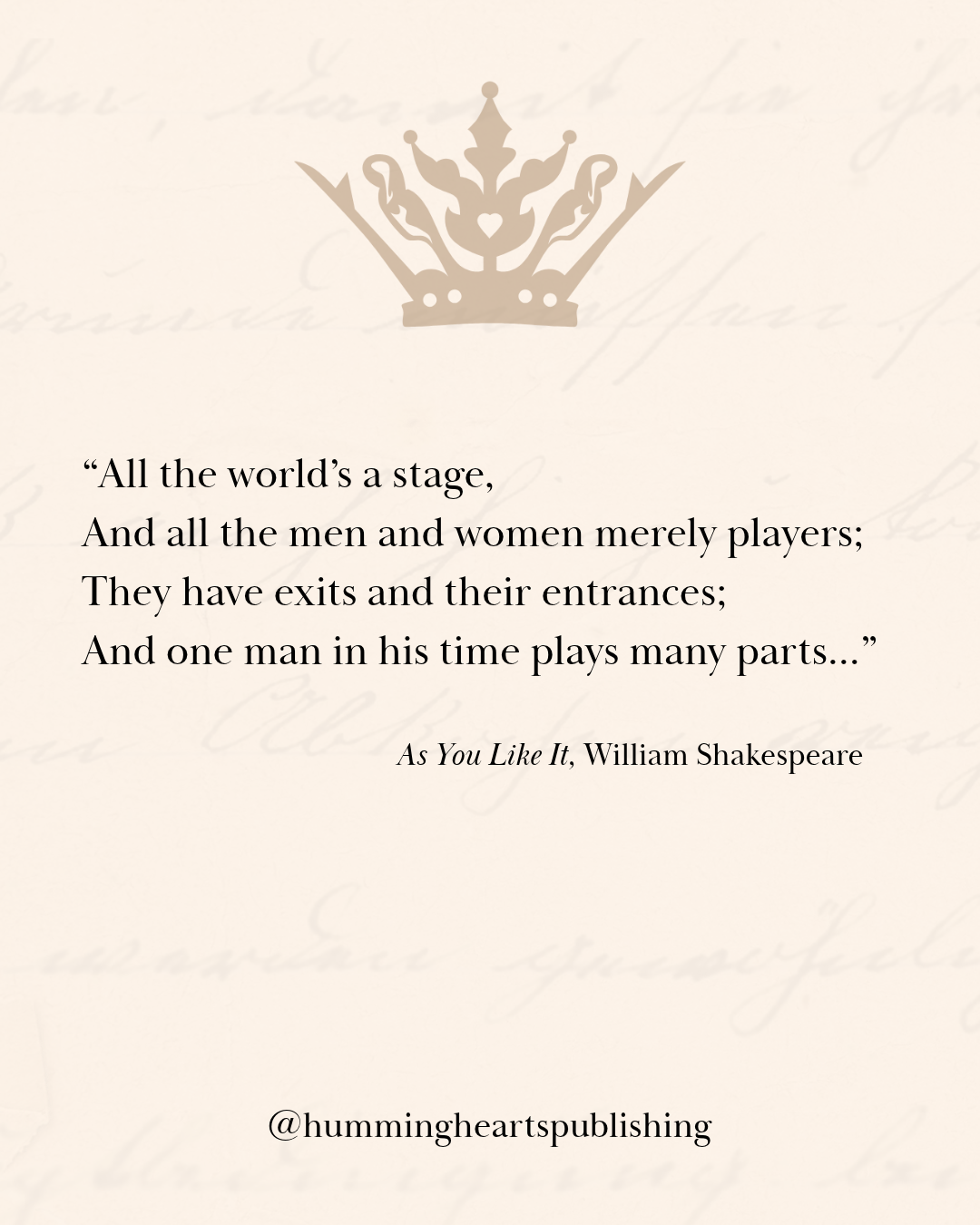
Here’s the extended metaphor example from As You Like It, spoken by Jaques:“All the world’s a stage,
And all the men and women merely players;
They have exits and their entrances;
And one man in his time plays many parts...”
You can read the full speech on Poetry Foundation, here.Here are two more examples of extended metaphors: one is within Neil Gaiman's novel, Neverwhere. This entire book is a metaphor for homelessness. Another is within Harry Potter when J.K. Rowling uses the dementors as a metaphor for depression.
Dead metaphor - A dead metaphor is one that has been so overused that it’s become part of every day speech. These metaphors are more cliché.
Dead metaphor examples: “Love is a battlefield”, “You are my rock”, “The early bird gets the worm.” These lines have become so common that they’re almost overlooked, and therefore, will more often fall flat.
Pin it! 📌
The difference between a metaphor and a simile
Metaphor and simile are siblings. Both literary devices compare two unlike things, however, you can spot a simile easily because the comparisons use the words, “like” or “as”.
Simile example: From my novella, “The silence lingered through the phone like a ghost.”
If I were to write this as a metaphor, I could say, “The silence was a ghost, it lingered.”
Here’s another simile example from the same story: “Time froze like ice on black pavement.”
imbuing figurative language strengthens your storytelling skills
There are a number of ways to create metaphors, chief among them are using other literary devices in a figurative manner to convey deeper meanings to your narrative. This is what makes storytelling enchanting: it’s when we wield words that embody layers of meaning.
For instance, you can create metaphors by using the five senses. The five senses are sight, sound, touch, smell, and taste. But take it a step further by using imagery with those senses to get across your metaphor. Get creative. The sky’s the limit, and the more you practice, the closer you are to writing with your literary voice.
Using literary devices to create meaning is powerful, and when you use them within your prose, you have an opportunity to enchant your readers with your literary voice.
But don’t make writing metaphors harder than it has to be. Within this article, I used the simplistic example of the nursery rhyme “Row, row, row your boat” because we writers get in the way of our writing—constantly. We overcomplicate it. Words are magic, and we’ve used metaphors all of our lives. They’re not as difficult as it may seem to put them together. Metaphors are everywhere. Using them in your writing will add depth, texture, and profound characterization.
Here’s another metaphor example from my poem, “Cottonwoods or Pavements”:
“I will build a garden where my roots once reached,
where the soil is rich and the trees applaud our laughter.”
Within these two lines, you can spot a couple of metaphors: “soil is rich”, and “trees applaud”. I implore you to search for metaphors in your radius! You will find more than you realize.
To conclude, imbuing figurative language into your story with metaphors makes your book that much more impactful and resonating with your readers. Utilize metaphors into your prose to showcase your theme, characters, and so much more for a rich reading experience.
So, with all that said, it’s time for you to go write your book. Test out various forms or metaphors while you’re in the writing room. Don’t be afraid to share your literary voice because readers crave it.
Happy writing,
Serena ✒️
What to read next: Writing descriptive sentences
FAQ’s
What is a metaphor?
A metaphor is the comparison of two unlike things.
What is a metaphor vs. Simile
They both are comparisons of two unlike things, the only difference is that similes use the words like or as to compare the two things.